Sunday, 1 September 2013

New Jersey Dental Group Defrauds Medicaid

New Jersey Dental Group Defrauds Medicaid

A New Jersey dental company allegedly defrauded Medicaid out of more than $181,000.
The state Comptroller’s Office filed the claim against an East Orange dental group. The claims state that Anicia Cruz-Sledge took over the Gentle Dental Group in 2007 because her husband suffered from a medical condition prohibiting him from working in his dental practice.
Cruz-Sledge then proceeded to make Medicaid charges using her husband Edward's name. She even hired someone—Carl McGloster—who had been disbarred from participate in Medicaid in an attempt for him to take the place of her husband.
McGloster issued 290 prescriptions and 63 were for controlled dangerous substances, according to the reports. The prescription came from the prescription pad of Edward Cruz-Sledge.
Anicia Cruz-Sledge also admitted to posing as a dental assistant and hygienist without being licensed to do so. In addition, she hired two other dentists who weren’t approved to provide services to patients.
New Jersey stopped the Medicaid payments to Gentle Dental earlier this year and looks to recoup $1.3 million. The state is also seeking $510,000 from McGloster for the improper Medicaid claims. McGloster allegedly wrote 427 prescriptions to Medicaid patients, even though he wasn’t allowed to partake in the program.

Lack of Knowledge May Result in More Mouth Cancer Cases

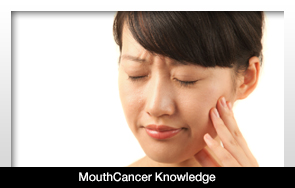
Lack of Knowledge May Result in More Mouth Cancer Cases

Not being educated about mouth cancer could lead to a major problem.
The number of people impacted by mouth cancer has risen drastically in recent years. A recent survey indicated that a lack of knowledge about the causes and risk factors for oral cancer may be why the amount of cases has gone up so much as of late.
The survey was conducted by the British Dental Health Foundation.
About two out of three people said they would alter their lifestyle and change their diet if the changes would lower the risk of developing mouth cancer. One out of three people said they would make changes to their life if they were more educated about mouth cancer. And about 90 percent of the people surveyed said they did not think they were at any risk for mouth cancer.
The reason for many of the responses in the survey is simple: people just don’t know enough information about mouth cancer. It’s unfortunate because mouth cancer kills more people than cervical and testicular cancer combined.
To avoid the risk of oral cancer, it’s best to visit the dentist on a regular basis. That way, any irregularities in the mouth will be noticed before it’s too late.

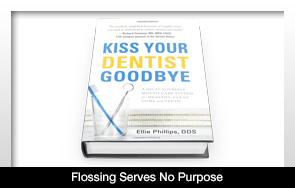
New Book States Flossing Serves No Purpose

New Book States Flossing Serves No Purpose

Utilizing dental floss may be a waste of time, according to a new book.
Ellie Phillips, author of Kiss Your Dentist Goodbye, claims that flossing provides no benefit with regards to preventing tooth decay. Phillips, who was one of the first female dentists to train at Guy’s Hospital London, proposes certain types of mouthwash for the function that she claims flossing doesn’t accomplish.
She suggests using a certain mouthwash to eat away at the bacteria, then another mouthwash after brushing and a third mouthwash to protect and strengthen teeth. Phillips also recommends chewing gum containing xylitol, which has proven to lower the risk of decay.
Phillips’s book likely will create controversy based on the recommendations of many other dentists, who for years have been saying that people should floss regularly. In Phillips’s favor, however, there isn’t an overwhelming amount of research to suggest flossing is 100 percent effective in eliminating tooth decay.
Other dentists would argue that in instances when dental floss doesn’t work, it may be an issue with the person utilizing the floss. The person may not be doing so correctly, making the flossing process useless.
While flossing benefits may be up for debate, there isn’t much debating about the controversy this book is sure to cause.

Friday, 30 August 2013

Blackberries May Lead to Healthy Gums


Written by Dentistry TodayMonday, 28 January 2013 12:23


Blackberries could be beneficial for one’s oral health.

A new study shows that this type of fruit could lead to healthy gums. The study appeared in the Journal of Periodontal Research. The study states that the antibacterial properties of blackberries lower the risk of gum disease and promote gum health.

There are also prior studies that have indicated the positive aspects of blackberries and claim they prevent cancerous cells from spreading.

Many studies have shown that eating a diet filled with fruits and vegetables is beneficial to one’s oral health. This type of diet can also lower the risk of developing oral cancer, diabetes and heart disease, among other health ailments.

Since good oral health leads to good overall health, it can be extremely beneficial for a person to implement blackberries into his or her diet.

Study on Chimps Questions Tooth Development Research


Written by Dentistry TodayTuesday, 29 January 2013 16:44


Tooth development and weaning in chimpanzees were thought to have a correlation—until now.

For more than two decades scientists concluded that juvenile primate tooth development had an impact on when the primates started to move on from their mother’s milk. But that isn’t true. The Harvard Department of Human Evolutionary Biology utilized high-resolution digital photographs of the chimpanzees to demonstrate that when the first molar appears, they continue to nurse.

The information appears in a January 28 paper in the Proceedings of the National Academy of Sciences.

Previous studies attempted to tie the correlation in chimpanzees to the way things play out in humans. But this study refutes that link.

Also, many previous chimpanzee studies involved captive animals or skeletons. Those studies proved to not be representative of most of the chimp population.

This study was different because it analyzed chimps in the wild and captive ones. Then, using advanced technology, the researchers were able to pinpoint the exact time in which the chimp’s molars erupted.

In this study, chimps still were interesting in nursing even after their first molar erupted. Essentially, they showed adult-like feeding behavior but still wanted to be nursed. The mothers sometimes have to fight off their children from nursing at that age. The reason for this behavior is unknown.

This study provides enough information for scientists to look to other species to determine a correlation involving tooth development and weaning that could be considered similar to human patterns.

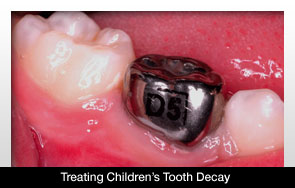
New Method of Treating Children’s Tooth Decay Explored


Written by Dentistry TodayWednesday, 30 January 2013 15:27


A needleless, drill-free method of treating tooth decay may have been created by a New Zealand college.

University of Otago researchers generated this new treatment, called the Hall technique, for the purpose of limiting the anxiety of children when they visit the dentist.

There were around 190 children ages 5 through 8 studied to compile the data. About 100 children were treated by using this new method and the others were treated using conventional methods.

The new process includes the placement of a stainless steel crown over a baby molar to seal the decay instead of using a drill to take out the decay and then add a filling. With the new method, the decay stops or slows down because the tooth is deprived of nutrients. The crown stays in place until it naturally falls out with the tooth.

The new method resulted in less dental anxiety among those children compared to the ones treated with the more standard methods. The final numbers showed that about 90 percent of the children enjoyed their dental visit when treated with the new method compared to only about 52 percent who enjoyed their visit with traditional treatment.

The new method also is 20 minutes faster and more successful.

There could be an even greater impact in the future. If people enjoy their dental visits as children, they will be more likely to visit the dentist as they grow older.

More work, however, needs to be done to determine the exact reasons for the more enjoyable dental visits.

As it stands now, these crowns are more expensive that traditional amalgam or white fillings. In the long term, however, this method could be more cost effective based on the fact that the new treatment is successful at a higher rate.

The study was funded by the Health Research Council of New Zealand.

Thursday, 29 August 2013

Audit of Massachusetts Medicaid Program Reveals Questionable Claims

Audit of Massachusetts Medicaid Program Reveals Questionable Claims

Dental providers in Massachusetts may have made some faulty Medicaid claims.
A state audit has found that about $1.3 million in bad medical claims were made from January 2008 through June 2011.
The auditor, Suzanne Bump, claims that MassHealth needs to be more thorough when screening payments from dental providers.
Many of the questionable charges stem from detailed oral screenings, which are only allowed for patients undergoing radiation, chemotherapy or organ transplant, according to MassHealth regulations.
The audit, however, discovered that 10 dental providers billed that state and received payments for about 20,000 oral screenings involving patients not eligible for these types of oral screenings.
Roughly 2,000 dentists took part in the state’s dental program during the audit period