Monday, 16 September 2013

Medicaid Fraud Busters Look to Prevent Repeat Occurrences


Written by Dentistry TodayMonday, 04 June 2012 15:17



Texas will try to make sure some dentists and orthodontists don’t try to pull any more Medicaid fraud.

The state hired a managed care firm to overlook all dental services provided in the state. Orthodontists now receive a flat payment for the work performed. The Texas Medicaid program now requires full dental molds to process a claim. The claims processing contractor also replaced the previous dental director. More orthodontists and staff have been added to cover all bases.

These sweeping changes were precipitated by the Medicaid payments Texas made two years ago. There was $185 million in reported Medicaid payments that year. The problem was that figure was more than the total the other 49 states combined spent on Medicaid.

This information led to an investigation in which it was discovered that people in Texas collectively don’t actually have teeth in that poor condition. Instead, some orthodontists were putting braces on children who didn’t them to drive up the cost of their Medicaid reimbursement payments—and making adjustments on the braces while keeping them on for an extended period of time.

Unfortunately for Texas, the figure in which the state has lost to fraudulent orthodontics is only a small portion of the total money Texas Medicaid loses. Nationwide, about $22 billion was lost last year due to improper Medicaid payments, according to some studies.

This national amount lost due to these fraudulent payments has declined in recent years, however. The percentage of Medicaid income lost due to fraud, abuse or other reasons was at 11 percent in 2008. In 2011, the figure was down to 8 percent. With more safeguards in place, widespread Medicaid fraud will likely continue to decrease.

Thursday, 5 September 2013

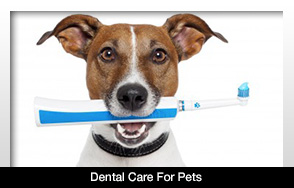
Dental Care Necessary for Pets


Written by Dentistry TodayTuesday, 10 July 2012 15:27


The most common problem for pets is something the average pet owner would not suspect. But dental problems impact about three quarters of pets by the time they’re 4 years old.

The problems that develop can be considered similar to the problems that humans develop after leaving their teeth untreated.

When a pet’s breath smells poorly, it’s not just something that comes with the territory for pet owners. It generally signals some of kind of dental problem for your cat or dog. A smaller appetite, discolored teeth and the possibility of bleeding gums likely signify a dental problem as well.

Professional teeth cleanings by a veterinarian are the best way to prevent these problems from occurring.

There are also several ways for the pet owner to maintain their pet’s oral health at an acceptable level. Brushing your pet’s teeth is a key and can be done by using a soft-bristle brush and designated pet toothpaste. Rawhide chews and rubber chew toys serve as a method to remove plaque from dogs’ teeth. There are also specific foods and treats designed with your pet’s oral health in mind.

Molecule Thwarts Tooth Decay-Causing Bacteria


Written by Dentistry TodayWednesday, 11 July 2012 15:52


A molecule has been discovered that destroys the bacteria associated with tooth decay in just a matter of seconds.

The molecule eliminates streptococcus mutans within 60 seconds, stopping any possible development of cavities and tooth decay. Two entrepreneurs—one has a PhD in molecular biology from Yale (Jose Cordoba) and the other graduated from the University of Chile (Erich Astudillo)—have made the discovery.

Because of the natural presence of bacteria in the mouth, streptococcus mutans is often present. It doesn't develop into a potential problem until there is a buildup of plaque. The bacterial colonies then have the ability grow and wreak havoc on the mouth.

That's why it's so important to maintain solid oral health. That way, cavities and tooth decay won't be a problem. But this new molecule has the ability to pinpoint streptococcus mutans and prevent the lactic acid release, dental enamel erosion and the eventual cavity formation.

Before this molecule gets put into practice, safety regulations must first be passed. If all goes well, the product may be readily available by the end of 2013 in products that prevent tooth decay, like gum, toothpaste, mouthwashes, etc.

Dental Gum Recommended to Improve Oral Health


Written by Dentistry TodayThursday, 12 July 2012 15:30


Dental health gum could be used to prevent infection-causing oral bacteria from impacting your teeth.

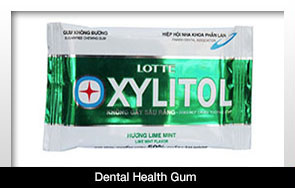
Dental health gum, such as Lotte Xylitol, contains natural sugar called xylitol and calcium phosphates. When these substances are combined, they battle tooth decay and gum disease, while also serving to strengthen enamel.

The dental gum also serves as a way of stimulating saliva flow, while exercising facial muscles at the same time—both positive things for your oral health.

Dental patients can learn more about this gum by asking their dentists.

Chewing this type of gum, in addition to practicing the other basic steps to maintaining oral health, are the best to not worry about developing a dental problem.

Tuesday, 3 September 2013

Sugary McDonald’s Drink Declared Healthy in United Kingdom


Written by Dentistry TodayThursday, 13 September 2012 15:16


A health committee in the United Kingdom may want to re-explore a recent decision.

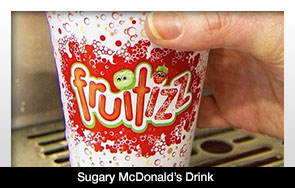
The Advertising Standards Authority claimed the McDonald’s drink Fruitizz can be part of the five-a-day portions of fruit and vegetables. The five-a-day portions of fruits and vegetables is a program that encourages healthy and drinking for children.

This ruling comes in spite of the fact that the drink contains six teaspoons of sugar.

The drink comprises fruit juice concentrate, fizzy water, natural flavorings and potassium sorbate.

A serving size of 250 mL has roughly 100 calories and 25 g of sugar. These levels of sugar stem from the amount of fruit juice content. Still, these levels did not nullify its ability to be considered healthy, according to the authority that makes these rulings.

This issue was examined after a British commercial mentioned the drink’s health benefits.

The ruling calls into question the standards used to determine a food or beverage’s health value.

Based on various studies, sugary drinks have been determined to cause tooth decay and erosion. There are also various other problems that can result from sugary drinks.

Still, based on the health standards for the five-a-day guidance in the United Kingdom, this drink manages to meet the requirements.

Nearly Half of American Adults have Gum Disease


Written by Dentistry TodayFriday, 14 September 2012 15:34


More adults in the United States have gum disease than one would think.

A new study shows that about 50 percent of American adults age 30 and older have gum disease. The study appears in a recent issue of the Journal of Dental Research.

Periodontitis is a major problem and leads to tooth loss in many cases.

To compile the data for this study, a research team looked through data from a previous study involving 3,700 adults age 30 and older. There were 47 percent of the people who had periodontitis—9 percent had mild gum disease, 30 percent suffered from moderate gum disease and 8.5 percent had severe gum disease. According to this information, roughly 65 million American adults have gum disease.

The research also concluded that 64 percent of adults age 65 and older had some type of periodontitis that could at least be considered moderate. This estimation is much larger than previous studies have indicated, according to the lead author Paul Eke.

The study also showed that the gum disease rates were highest for males, Mexican Americans, adults with less than a high school education, adults whose income would be considered below the poverty line and people that currently smoke.

There are several warning signs for gum disease, including swollen, tender, or bleeding gums. Chronic bad breath is another sign of gum disease.

Tooth Provides Dental History


Written by Dentistry TodayThursday, 20 September 2012 15:49


A recent discovery may provide the first tangible proof of dentistry.

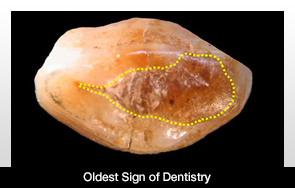
A 6,500-year-old tooth was found and it contained traces of beeswax filling, according to the journal PLOS ONE.

The research team from the Abdus Salam International Centre for Theoretical Physics in Italy determined that the beeswax was placed inside the person’s mouth right around the time the person died. If the beeswax was placed while the person was still alive, the goal was most likely to lower pain and sensitivity in the tooth. The pain likely stemmed from a vertical crack in the enamel and dentin.

The tooth was in poor shape, likely resulting from activities the tooth was involved in other than eating.

There is little proof in recorded history to show when the first usage of dentistry occurred. This specimen, which was was found in Slovenia, could provide an answer to this question.

This could be considered one of the most ancient examples of dentistry in Europe and it is likely the first instance in which there was some kind of treatment to alleviate pain from a “filling.”